Lise van Hal on her placement at NEWTON film: What it takes to launch a documentary in sixty cinemas across the Netherlands
04/10/2026 - 13:33

- Stories
- Student work
Can you tell us a bit about your background and why you chose Creative Business?
Lise: 'I have always been really interested in film. I grew up doing a lot of theatre, and from there I gradually rolled into the world of filmmaking. At some point I realised I loved being behind the camera and creating projects. But I was not entirely sure which direction I wanted to go in, so I was looking for a degree programme that was a bit broader than just studying film. Creative Business gave me the space to explore, and then I chose to specialise in audiovisual media so that I could really focus on what I loved. Even though the programme touches on things like magazines and radio, I discovered early on that film was where my interest truly lies. And I think it is really valuable that the programme also teaches you the management and business side of things, because understanding the whole picture makes you a better maker.'
How did you end up doing your work placement at NEWTON film?
Lise: 'I had a very clear idea of what I was looking for: a placement with a documentary focus. But documentary is quite a difficult area, because you rarely have a large company behind it. It is often one person or a very small team. I searched specifically online and that is how I found Ton van Zantvoort and NEWTON film. I sent him an email, we spoke on the phone, and it turned out he is based in Breda as well. My placement coordinator at BUas was also enthusiastic and said that if I really wanted to get into the documentary world, this was about as good a placement as it gets. So I went for it, and I am really glad it worked out.'
What kinds of projects and tasks have you been involved in during your placement?
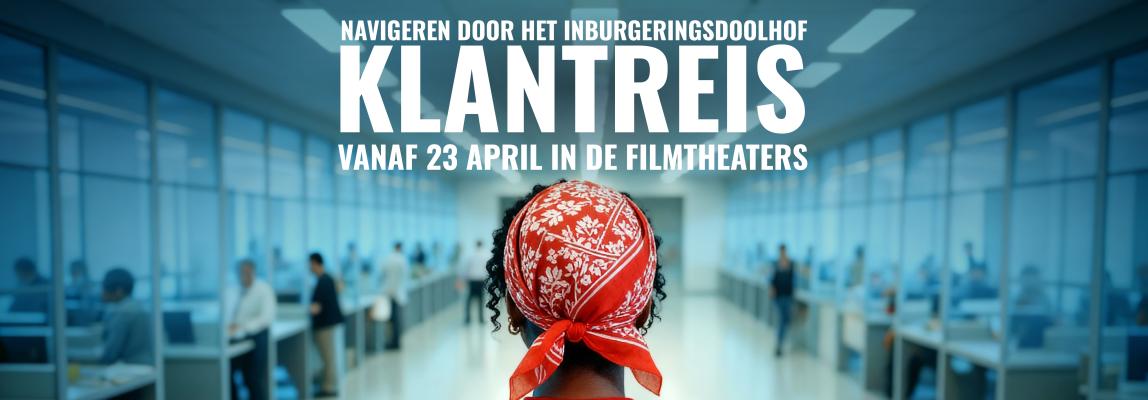
Lise: 'The main focus right now is the release of Klantreis, which is coming out in April and will be screened in over sixty cinemas across the Netherlands. There is an enormous amount of promotion work involved. I create social media content, reach out to cinemas, help prepare interviews, and work on materials for the press kit. I also edit short teasers from the film. A few weeks ago we were at the Movies that Matter festival in The Hague for the world premiere, which was incredible. On top of all that, I sit in on meetings for other documentaries that Ton has in development as a producer. I really function as his closest collaborator, which is a great position to be in.'
What was the most valuable thing you have learned so far?
Lise: 'So much, really. On a practical level, all the marketing work I did at BUas has been incredibly useful. Learning how to identify a target audience, which platforms to use, how to research what kind of content works for different groups, all of that directly applies to what I am doing now. But the most valuable thing I have learned from Ton is how to tell a story well, how to make something feel relevant, and how to get people to do the work for you rather than trying to do everything yourself. He has this way of building a community around a film and activating people to spread the word, without a big budget. Watching that happen has been a real eye-opener.'
Klantreis deals with the Dutch integration system. Can you tell us a bit more about the film and who it is aimed at?
Lise: 'The film follows the journey that status holder go through after leaving an asylum seeker centre: what is called the customer journey through the Dutch integration system. It covers housing, education, employment, financial support, all of these different sectors that normally operate in isolation. Ton has mapped all of that out in his film, and what makes it so powerful is that you follow real people, a Syrian family and two sisters, through the whole process. The feedback from screenings has been that no one has ever shown all those different parts of the system together in one place like this. For municipalities it is really valuable to see where the process breaks down and where things might be improved. That is one of the core aims of the film: to create insight and, ideally, to prompt change.'
What has been the biggest challenge you have faced, and how have you handled it?
Lise: 'Promoting a film about integration is genuinely tricky. The word itself can put people off. So we have had to think carefully about how to reach not just municipalities and institutions, where it is a relatively easy sell, but also general audiences. Luckily, there is a lot of warmth and humour in the film, and it is deeply personal and emotional. So for the general public we focus on those qualities rather than the policy angle. It is a constant balancing act: how do you frame the same film differently depending on who you are talking to? That has been the main challenge, and it has taught me a lot about targeted communication.'
Has the subject matter of the film touched you personally?
Lise: 'Yes, actually. During my minor last year, I made my own documentary, which also touched on the theme of integration, about a restaurant in Antwerp. So I already had some personal connection to the topic. What strikes me every time is the contrast between how the media often covers refugees, in numbers and statistics, and what you see when you actually spend time with people. The main characters in Klantreis are real people with real stories, and that always moves me. It is a reminder that we are all just trying to find our way in the world. I think that is something Ton had in mind from the start: not to take a political position, but simply to show what this process actually looks and feels like from the inside.'
How has the placement matched your expectations going in?
Lise: 'I think what has surprised me most is seeing just how much initiative and energy it takes to keep momentum around a film. You are constantly trying to keep people engaged, building a kind of community around the project, and that is harder than it sounds. But we have also managed some really wonderful things. We got a local caramel waffle brand to sponsor us, and Arriva (bus operator), who feature in the film, are now running buses with ads for Klantreis through the city. Pulling those things off without a big budget has been genuinely exciting. So the experience has been more intense than I expected, but also more rewarding.'
Has this experience influenced how you think about your future career?
Lise: 'Definitely. Watching Ton work has made me realise that this kind of life, being an independent filmmaker, is a real passion project. He works evenings, weekends, everything. That is inspiring, but it is also made me think more carefully about what I want my own career to look like. I do know that making is at the heart of it for me. I am already developing an idea for my Capstone project, a documentary of my own. I cannot say too much yet, but it follows a woman who, fifty years ago — as a young woman in her twenties — made the radical decision to step away from society and build a fully self-sufficient life. Now in her seventies, she still lives by that choice.'
Connect with Lise van Hal on LinkedIn.
Klantreis is showing in over sixty cinemas across the Netherlands from 23 April 2026. Find screening information and further details at newtonfilm.nl/films/klantreis. For a glimpse of the world premiere at Movies that Matter, see the impression here.