I just think Master of Arts is a nice title
12/03/2025 - 08:13

- Stories
In 2022, Maurits Hagemans decided to apply for the BUas’ Master Media Innovation. At the time, he had been teaching at the Grafisch Lyceum in Utrecht and Rotterdam for some years and was working at PXL University of Applied Sciences and LUCA School of Arts in Belgium, where he was also co-coordinator of the Cross-media programme. So the media profession was certainly not new to him. Why pursue that master’s degree?
‘I just think Master of Arts is a nice title,’ Maurits begins his story, ‘I didn't have a master’s degree yet and wanted to further professionalise in digitisation and see if I could combine it with the circular economy. I also saw it as an opportunity to further develop my research skills, and by that I mean conducting research whose results can be directly applied in practice, which is something BUas excels at.’
You took the executive study track of the master’s?
‘Yes, it was mostly online. That was inevitable at the time, because we were in the tail end of the coronavirus crisis. In any case, I’d never have been able to combine it with my work in education. I must say that the interaction was very good online too. It was a diverse group, everyone with their own subject profile; that keeps you on your toes. Every now and then, we met up on campus to work on assignments.’
Do you have an example of such an assignment?
‘During the master’s programme, we were given the assignment to think up a platform in the context of Media Technology. I’m a musician myself, and it became a platform for musicians. We’re all familiar with Spotify of course, but musicians themselves derive little income and exposure from it. I wanted to explore whether I could make such a music platform more local, for both fans and musicians. I then developed a business model for it. The nice thing is that I picked this up again after my master’s degree, and it is now evolving from a music application into a platform for electronic improvisation.’
You are a musician yourself?
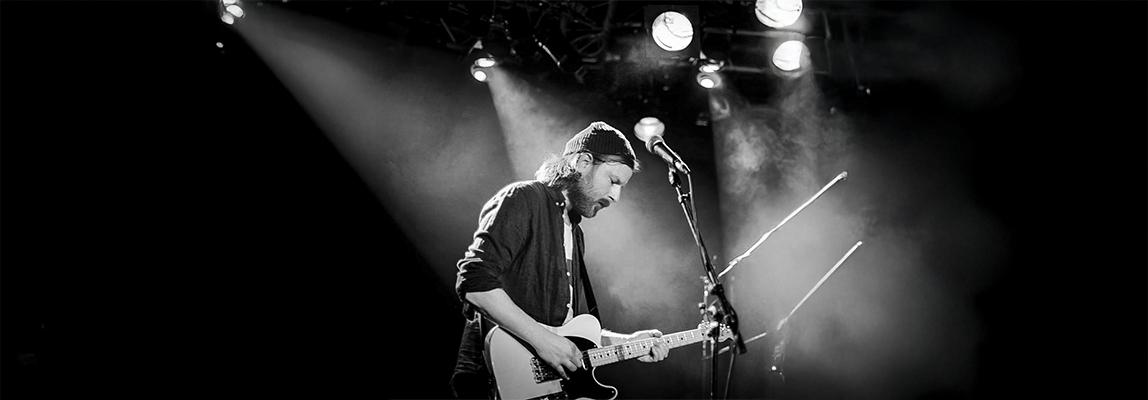
‘Yes, so I’m familiar with the scene. I know that in Utrecht, for example, where I come from, there is a lot of improvisation going on in many places. This is not the kind of music that gets recorded right away; think of atmospheric music and electronic inspiration, which as a musician you don’t readily put on Spotify. But of course you want to share your music, and that’s what we’re responding to with this new platform. We’re still in the development phase, but there’s already a prototype where musicians can upload music in such a way that it always remains registered and that musicians ultimately get more out of it. That’s the idea.’
So the master’s programme gave you something very specific?
‘Thanks to the master's programme, I can now become self-employed in a smarter way. I can respond better to what’s happening in the market. Before my master’s programme, I was already working with VR and AR. I did research on Digital Twins. These are actually digital copies of a product or an environment, intended for simulation and testing purposes. AR brought me into the world of research, and I started applying it in the master’s programme.’
Digital Twins.
Not as in: a copy of a person?
‘That’s also possible. Interesting example; when we organised a gig at the Helling in Utrecht, we once used a Digital Twin of a bass player who was otherwise engaged at the time. We had scanned the stage, so fans could walk around digitally on the stage where the band would be playing, and the bass player could be seen there via a QR code.’
Becoming smarter as a self-employed person; are you referring to the music platform? Do you have your own business?
‘I run my own company Adaptable from Antwerp, where I live. I mostly develop practical solutions in the field of media technology and Digital Twins. That is one of my activities, because I also work as a researcher at Utrecht University of Applied Sciences one day a week, and I’m a researcher at PXL Research in Belgium. My research focuses primarily on transitions to a circular economy. In a subsequent study, for example, I’m going to examine how we can use Digital Twins in the development of future-oriented districts, and that future-oriented aspect is not only in terms of technology, but especially in terms of social impact.’
Here I see a nice crossover with the BUas domain Built Environment. Idea?
‘Who knows? A wonderful reason to visit your beautiful campus again. I was last there for the graduation ceremony last summer. In the Chapel. Great place!’
Photo credits:
Nanne Spielmann
Interview by:
Maaike Dukker-'t Hart