Giving life to forgotten places: An interview with Nia Yonkova and Evgenia Trifonova
01/29/2026 - 14:06

- Stories
- Student work
Can you start by explaining the assignment that led to God’s Will?
Nia: ‘As part of our Creative Business programme, we did a course called Creative Producing. The main assignment was to create a short film. We first worked in pairs to develop concepts, presented them through concept videos, and then the whole group voted on which ideas would be realised. Only a handful of projects were selected, and those teams were then expanded.’
Evgenia: ‘What’s interesting is that the idea for God’s Will existed even before the semester started. Nia called me one evening and told me about this story she had in mind. At the time, I was enrolled in a different course, more focused on marketing, but once I read the story, I completely understood her vision and decided to switch to Creative Producing.’
What is God’s Will about, and why was this story important to tell?
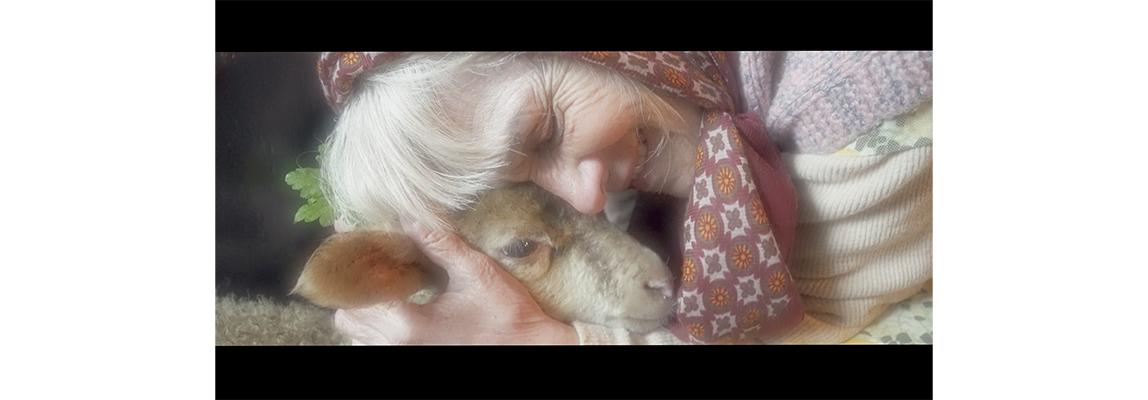
Nia: ‘God’s Will is a short film with religious undertones, but at its core it is a social story about abandoned villages in Bulgaria and the loneliness of the elderly people who remain there. While many young Bulgarians are living modern, Western-oriented lives, older generations are often left behind in places that are slowly falling apart. The story is very much inspired by our own grandparents and that sense of nostalgia and loss.’
Evgenia: ‘We wanted to show a side of Bulgarian life that is not often represented. It’s not that all villages are abandoned, but there is a real issue of isolation among older people. Our aim was to create awareness, not only within Bulgaria but also internationally, so audiences in Western Europe could understand this reality.’
The film is an adaptation. Can you tell us more about that?
Nia: ‘Yes, the film is based on a short story by the Bulgarian author Yavor Tsanev. That context was very important to us. Adapting an existing literary work added a lot of responsibility, but it also gave the project depth and cultural grounding.’
Evgenia: ‘One of the most special moments for us was screening the film in Ruse with Yavor Tsanev present. He was genuinely pleased with how his story was translated to the screen, which meant a lot to us.’
What roles did each of you take on during the project?
Evgenia: ‘I started as the screenwriter. Writing was something I had focused on during my studies, so Nia asked me to develop the script. We worked very closely, as she had a very clear directorial vision. Later, I also took on marketing and PR, which aligned more with my career goals.’
Nia: ‘I was the director and co-writer. I’ve been specialising in audiovisual and television production throughout my studies, so directing God’s Will felt like the natural next step. I wanted to create something substantial that could be shown to real audiences and receive genuine feedback.’
The core team was further strengthened by Shanel Yuseinova, who worked as producer, and Polina Peteva, who was responsible for editing the film.
How did you manage the production process while being based in the Netherlands?
Nia: ‘It was definitely challenging. We were planning and organising everything remotely while the shoot itself took place in Bulgaria. Logistics, locations, props, and casting all had to be coordinated from a distance. Our producer, Shanel, played a huge role in keeping everything together.’
Evgenia: ‘Casting was an adventure in itself, especially finding the right actress for the grandmother. We auditioned many people, until we found someone who truly felt like “our grandma”. Props were another story entirely, we relied heavily on our parents, grandparents, and even neighbours, who generously contributed furniture, tablecloths, clothes, and household items.’
What were some of the biggest challenges during the shoot?
Nia: ‘We shot over four very intense days, plus one preparation day. It was cold, the location was remote, and we were working long hours. One unexpected challenge was working with animals — we had a lamb in the film — which led to some stressful but memorable situations, including a late-night trip to the emergency room due to ticks.’
Evgenia: ‘It was physically demanding and emotionally intense. We were shooting up to 15 or 16 hours a day, often in mud, cold, and darkness, knowing that we had very limited time before flights back to the Netherlands. That experience made me realise that full-scale film production is not where I see my future, but it also made me appreciate teamwork and perseverance.’
How did you finance the film?
Nia: ‘Part of the assignment was to find our own funding, so we launched a crowdfunding campaign. It was stressful at first, but the response was overwhelming. Friends, family, and even people we hadn’t spoken to in years donated to support the project. It showed us that people believed in our story and our mission.’
Evgenia: ‘From a marketing perspective, it reinforced something very important for me: when you have something meaningful to say, people respond. The message matters more than the tools you use.’
How was the film received once it was completed?
Nia: ‘The response exceeded everything we expected. The film premiered at Pathé Breda and later screened in small villages across Bulgaria, as well as in larger cities such as Varna, Ruse, Pleven, and Veliko Tarnovo. We wanted to bring the film to people whose lives it reflects, especially elderly audiences who rarely get access to cinema experiences.’
Evgenia: ‘Some screenings had over 150 people attending, and the emotional reactions were very strong. People cried, stayed to talk, and shared their own stories afterwards. We also have an upcoming screening at Dokhuis in Rotterdam, which feels like a meaningful continuation of the film’s journey.’
Alongside local screenings, God’s Will has been selected for numerous international film festivals. Highlights include Euroshorts Young Filmmakers in Poland, the International Moving Film Festival in Mexico, and the Eastern Europe Film Festival in Romania, where the film received the awards for Best Student Filmmaker and Best Cinematography, as well as several other festival selections.
What are your plans for the future, both for the film and for yourselves?
Evgenia: ‘The film is still on its festival journey, and we’re also in talks with Bulgarian television channels about broadcasting it once the festival run ends. Personally, I’m now focusing on marketing and communication, working on my thesis and internship in a more corporate, technical environment.’
Nia: ‘I’ve just returned from an exchange in South Korea and I’m currently working on video and film projects for a gallery as part of my graduation. I already have ideas for another film adaptation based on Bulgarian literature, and I hope to secure larger funding for that. Evgenia will always be my first choice for marketing and PR, even if she avoids the cold production days.’
Where can readers follow the film and your work?
Updates about God’s Will can be found on Instagram and IMDb:
Instagram: https://www.instagram.com/godswill_shortfilm/
IMDb: https://www.imdb.com/title/tt37547105/
You can also connect with the filmmakers via LinkedIn:
https://www.linkedin.com/in/nia-yonkova/
https://www.linkedin.com/in/evgenia-trifonova-669a5a253/