Adrián Ivančák on learning colour grading and finding his creative path
03/12/2026 - 10:51

- Stories
- Student work
What is your background, and what led you to study Creative Business at BUas?
Adrián: ‘I chose to study at BUas because I was already doing creative studies in high school, such as filming, graphic design, programming, and IT networking. I really enjoyed those courses and wanted to continue in a similar direction, but there weren’t many options to study something like Creative Business in Slovakia. That’s why I started looking abroad and eventually ended up in the Netherlands.’
You worked on a project about colour grading. What inspired you to focus on this topic?
Adrián: ‘I’ve been doing photography for around six years and video for about three or four years. I enjoy making videos in my free time, and I’m also a big movie fan. What always fascinated me is how every film has a unique visual style and atmosphere. The colours play a big role in that feeling the director wants to create. When I heard about the individual project where we could choose any topic within the media industry, I immediately thought about learning colour grading so I could create those kinds of cinematic looks myself.’
What did the project involve, and how did you approach it?
Adrián: ‘The project lasted around nine weeks, and the idea was to learn something new and document the learning process. We had to explain what we wanted to learn, how we were learning it, and then present a final result. I started by researching colour grading techniques and choosing which software to use. I eventually decided to work with DaVinci Resolve, which is actually an industry-standard program. I used the free version because it can already do about 90% of what the paid version offers, which is perfect for students.’
Did you work with your own footage or use existing material?
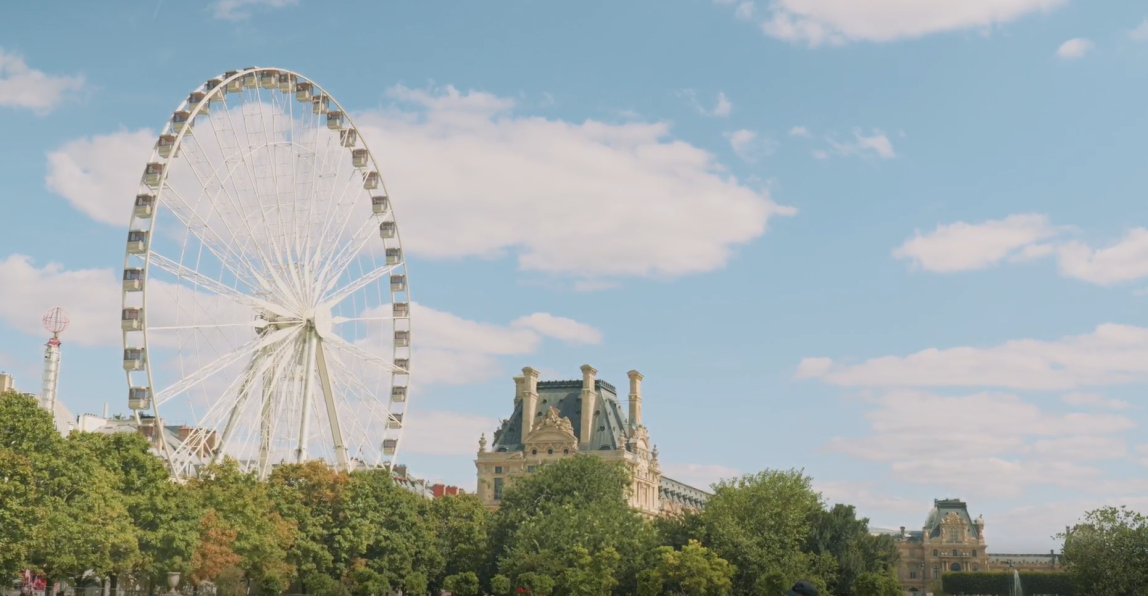
Adrián: ‘I wanted to work with my own footage rather than downloading something from the internet. That way I could learn from my own mistakes as well. I used videos I filmed during the summer on my new camera which could shoot in log profile (important for colour grading), including footage from a trip to Paris and Slovak mountains. The videos themselves didn’t really have a story, they were more a collection of different shots, but that actually helped me practise colour matching between scenes and experimenting with different looks.’
What were the biggest challenges during this project?
Adrián: ‘One of the biggest challenges is getting the camera settings right while filming. If the footage is not exposed correctly or not recorded in the right profile, it becomes harder to grade later. Another challenge is matching footage from different cameras. For one of the projects I used two cameras, and each one has a slightly different colour profile, so you have to adjust them carefully to make the final video look consistent. Finally, the software itself is very complex because it’s designed for professionals. The Colour page in DaVinci Resolve works with nodes, which lets you stack different colour adjustments, mask certain areas of the image, and track those areas if something moves in the shot.’
How did you learn these skills during the project?
Adrián: ‘A lot of my learning came from online tutorials, especially on YouTube. For me, that’s one of the best platforms for learning practical skills because you can search for exactly what you need and follow along at your own pace. Because I was genuinely interested in colour grading, I often worked on it during my free time as well. It didn’t always feel like an assignment, it felt more like experimenting with something I enjoyed. That’s also the reason I made so many extra videos.’
Did you experiment with different colour styles or techniques?
Adrián: ‘Yes, one thing I explored was using LUTs, which are basically presets that apply a certain colour style to footage. Some LUTs are designed to replicate the look of famous movies or old colour filmstock's. They’re not perfect straight away because every camera records colour differently, but they’re a nice starting point. After applying the LUT, you can fine-tune the colours to achieve the movie look you want.’
What feedback did you receive on your colour grading work?
Adrián: ‘Most of my feedback comes from people who follow my work online. I usually share my projects on Instagram. One time, I posted a car video on my story where I had focused a lot on showing the colour-grading steps, and a friend of mine who owns a classic Porsche replied saying I did a great job. He doesn’t usually react to my work, so that meant a lot, especially because it happened near the end of the project, when my grading had improved quite a bit.’
You are currently doing an internship. What is your role there?
Adrián: ‘I’m currently interning at a production company, PEEK Creative Studios, as a creative producer. It’s quite different from what I did before because I’m more involved in supporting the production process rather than making creative decisions. I actually chose this role intentionally because producing was something I tended to avoid during school projects. I realised that if I want to work in the film industry, it’s important to understand how the production side works as well. This internship gives me the chance to learn how projects are organised behind the scenes and how a team works together to make a production happen.’
Does your technical knowledge help during your internship?
Adrián: ‘Not directly in terms of decision-making, because I’m mainly assisting the team. But it’s still very helpful because I get to observe professionals working on set. I often ask them questions about their equipment, camera settings, or why they choose certain lenses. Being around experienced filmmakers and learning from them in real situations is very valuable.’
Looking ahead, what kind of career would you like to pursue after graduating?
Adrián: ‘Ideally, I would love to start something of my own with friends from BUas. We all have different strengths, so we could combine those skills and build something together. Another option I’m interested in is becoming a director of photography. I enjoy the technical and visual side of filmmaking, especially working with cameras, solving creative problems on set, and thinking about how lighting, framing, and movement can shape the final image.’
You can connect with Adrián Ivančák on LinkedIn or check out his portfolio and Instagram.